Estimated reading time: 4 minutes
Key Takeaways
- Backing up files to Google Drive keeps your data safe across devices, including PC, Android, and iPhone.
- You can back up files manually using web upload or drag and drop for quick uploads on PCs.
- For automatic backups on computers, install Google Drive for Desktop to sync important folders continuously.
- Android users can back up app data and photos easily using built-in functions and the Google Photos app.
- iPhone users can use the Google Drive app for manual uploads or Google One for a full device backup.
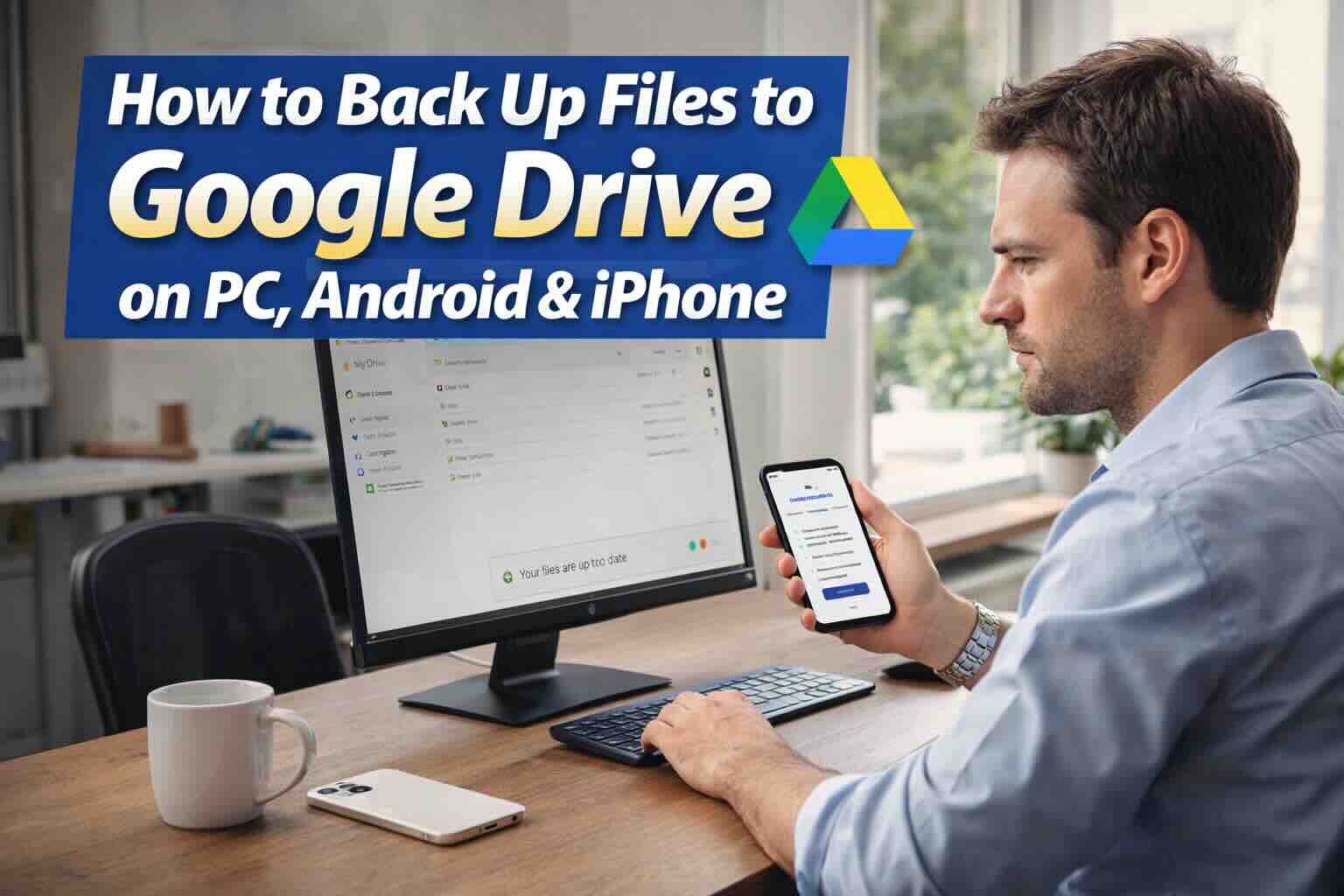
Backing up your files to Google Drive is one of the smartest ways to protect your important documents, photos, and personal data. Whether you use a Windows PC, Mac, Android phone, or iPhone, Google Drive makes it easy to store your files safely in the cloud.
In this complete guide, you’ll learn how to back up files manually for quick uploads or automatically for continuous protection across all your devices.
1. How to Back Up Files to Google Drive on a Computer
You can back up files from your laptop or desktop in two ways: manual upload or automatic sync.
Method 1: Manual Upload (Fast & Simple)
This method is perfect for occasional backups when you don’t want to install any software.
Option A: Web Upload
- Open your browser.
- Go to drive.google.com.
- Click + New.
- Select File upload or Folder upload.
- Choose the files from your computer.
Your files will begin uploading immediately.
Option B: Drag and Drop
This is even easier.
- Open Google Drive in your browser.
- Open your file folder on your computer.
- Drag files or folders directly into the Drive window.
That’s it. Your files are now backed up.
Example for PC Users
Let’s say you just finished creating a resume on your Windows 11 laptop. Instead of leaving it only on your Desktop, you drag the file into Google Drive. Now it’s safely stored in the cloud and accessible from any device.
Method 2: Automatic Backup (Continuous Protection)
If you want your Documents or Desktop folders backed up automatically, install the official desktop app.
Step 1: Install Google Drive for Desktop
Download and install the Google Drive for Desktop application from the official website.
Step 2: Select Folders to Back Up
- Open the app.
- Click Preferences.
- Go to My Computer.
- Click Add Folder.
- Choose folders like Documents, Pictures, or Desktop.
Step 3: Enable Sync
Choose Sync with Google Drive.
Now, whenever you add, edit, or delete files on your computer, the changes will automatically update in the cloud.
This is ideal for work files, school projects, or important documents you update frequently.
2. How to Back Up Files on Android Devices
If you use an Android phone, backing up to Google Drive is built into the system.
Manual Upload on Android
- Open the Google Drive app.
- Tap + New.
- Tap Upload.
- Select your files.
Your files will upload to your Google Drive storage.
Full Device Backup on Android
To back up app data, contacts, and device settings:
- Open Settings.
- Tap Google.
- Select Backup.
- Tap Back up now.
This protects important system data automatically.
Back Up Photos and Videos
Use the Google Photos app to back up your media files.
Once enabled, your photos and videos upload automatically to your Google account.
Example for Android Users
If you drop your phone or upgrade to a new Android device, your contacts, apps, and photos can be restored instantly from your Google backup.
3. How to Back Up Files on iPhone & iPad
Apple users can also back up data to Google Drive easily.
Manual Upload on iPhone or iPad
- Open the Google Drive app.
- Tap the + button.
- Tap Upload.
- Select files from your device.
Full Device Backup Using Google One
To back up photos, contacts, and calendar data:
- Install the Google One app.
- Open the app.
- Tap Set up data backup.
- Follow the prompts.
This provides more complete cloud protection for Apple devices.
Example for iPhone Users
If you’re switching from an iPhone to Android or just want extra backup beyond iCloud, Google One ensures your important data stays secure in your Google account.
Pro Tip: Save Files Directly from Chrome
If you frequently save PDFs or web pages, use the Save to Google Drive Chrome extension in Google Chrome.
This allows you to:
- Save files directly to Drive
- Skip downloading to your computer first
- Organize files instantly in the cloud
It’s especially useful for students and remote workers.
Manual vs Automatic Backup Comparison
| Method | Best For | Setup Required |
|---|---|---|
| Web Upload | Occasional file backup | No software |
| Drag & Drop | Quick file transfer | No software |
| Drive for Desktop | Continuous folder sync | App required |
| Android Backup | Full device protection | Built-in |
| Google One on iPhone | Full data backup | App required |
Final Thoughts
Backing up your files to Google Drive protects your data from hardware failure, accidental deletion, or device loss. Whether you choose manual uploads for quick tasks or automatic sync for full protection, Google Drive offers flexible options for PC, Android, and iPhone users.
Setting up automatic backups is the best way to make sure you never lose important files again.